

Contents
Complex Project Management Profession Strategy
The Complex Project Management Profession Strategy is designed to build and uplift complex project management skills collaboratively across the APS. The strategy aims to provide a structured approach to the development of complex project management (CPM) skills across the APS, through the key themes and initiatives set out below.
This will enable the profession to connect, strengthen practices, collaborate across agencies, and strategically build capability and talent in the CPM workforce and across the wider APS.
By delivering this uplift, we will strengthen skills and career pathways in complex project management to better deal with the increasing number of complex challenges facing the APS to deliver successful outcomes for the government and the public.
Read the full strategy below or download a printable copy.
Download the Complex Project Management Profession Strategy (PDF, 923 KB)
Download the Complex Project Management Profession Strategy - Accessible version (PDF, 1.2 MB)
Prelude
Learning from failure – An independent review of government processes for implementing large programs and projects by Professor Peter Shergold AC – 2015

“The work of government is hard. Its challenges are wicked. Problems do not always have defined boundaries, solutions can (and should) be contested and authority is ambiguous. Political change can occur unexpectedly and at breakneck speed. Administrative change generally takes place in an almost imperceptible fashion but can be transformative in nature.
Project and program managers need to be recognised as a community of practice in the public service, with attributes as important as those who possess legal, accounting, medical or veterinary skills. Capability needs to be progressively enhanced across the APS in a systematic fashion… Today the focus is … on performance-based outcomes. Results matter. New professional skills are required.
Program and project management are too often seen as control activities based on templates and Gantt charts. They are actually creative processes. In practice, they require a collaborative approach to aligning multiple delivery tasks to achieve agreed objectives in the most effective way, within time and budget constraints. They require discipline in maintaining single point accountability while being open and flexible to the opportunities of networked governance structures. That calls for professional expertise.
The APS needs to build a stronger cohort of skilled and experienced program and project managers ... Some experts already work in the APS, but their experience and qualifications are still not sufficiently recognised and their professional status and career development rarely receive the attention they deserve.
Public servants need to value program management skills. APS recruitment practices should better recognise the strategic relationships between design, delivery and evaluation in order to promote more diverse experience among senior executives. Increasing core capability, mobilising expertise and valuing leadership in program and project management will strengthen the APS as an effective, professional and resilient institution that - supported as necessary by outside help - has the capacity to deliver the agenda of the government of the day..”

Report of the Royal Commission into the Home Insulation Program by Ian Hanger AM QC – 2014
“14.11.1 The work of Government is large and varied. Departments variously devise policy, design programs and administer them, deal with citizens, advise the political Executive and attend to myriad activities which are associated with each of these.
I recommend that:
14.2.14.1 before charging an agency with the implementation of a complex or large project, some assessment be made of that agency’s capacity to deliver it including, most importantly, its experience in delivering similar projects;
14.2.14.4 the staff that are recruited and utilised be persons with relevant expertise and experience.
14.2.17.2 …provide project-delivery training to build the capability of APS officers who are, or are likely to be, responsible for managing projects. … I recommend improving institutional capability in respect of project management...”
Context
Why does the Australian Public Service (APS) need a complex Project Management (CPM) Profession?
The APS is facing an increasing number of challenges in the fast-paced and ever-evolving modern society. Increasing policy complexity, rapidly fluctuating international and domestic dynamics, and delivery demands are reshaping how the APS delivers outcomes for government and the Australian community.
Government projects are becoming more complex, often operating under intense public scrutiny and high expectations for transparency and accountability. The volume of information to be processed is unprecedented, and the pace of change, coupled with uncertainty and emerging technologies, demands new ways of thinking and working. Projects now face a broader range of influencing factors, from stakeholder engagement and ethical considerations to sustainability and long-term public value.
To meet these demands, a dedicated Complex Project Management (CPM) Profession has been established so the APS can strengthen its capability to manage complexity across the delivery of projects, policy and services. As part of the broader APS Professions model – a capability-building initiative – this profession will enhance the skills, expertise and readiness of the workforce to deliver in increasingly uncertain and dynamic environments.
What makes a project or deliverable 'complex'?
Success in complex projects goes beyond traditional metrics such as budget, schedule, and quality. It requires the ability to navigate ambiguity, adopt adaptive and experimental approaches, and deliver outcomes that reflect broader public expectations. This includes fostering innovation, building strong partnerships, and ensuring long-term value for the community.
There is no ‘one-size-fits-all’ in project management. Effective project management requires approaches to be tailored to best suit a wide variety of factors that are encompassed by what is referred to as the ‘complexity’ within the project environment.
Complexity relates to the type and level of uncertainty, interdependencies, and the variation of factors outlined in Figure 1 that need to be acknowledged and addressed in order to successfully execute projects. Otherwise, even the most robust application of a project management methodology may not lead to successful outcomes, as the methodology needs to be modified to suit the context.
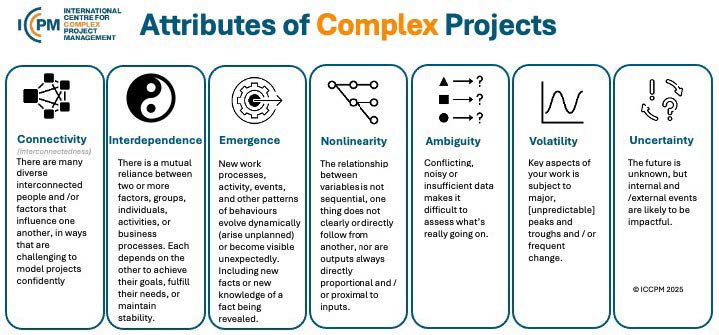
Figure 1: International Centre for Complex Project Management (ICCPM) Attributes of Complex Projects
Does project management operate in isolation?
Project management does not operate in isolation - it functions within a dynamic ecosystem (see Figure 2), requiring continuous interaction with other core processes like change management, evaluation, procurement, and planning to achieve project success and adaptability. These interactions ensure that projects are aligned with evolving needs, incorporate necessary adjustments, and leverage shared learning, transforming individual projects into drivers of broader organisational resilience and innovation.
Complexity exists within this PM ecosystem, affecting the risk profile, delivery of outcomes and successful management of projects.
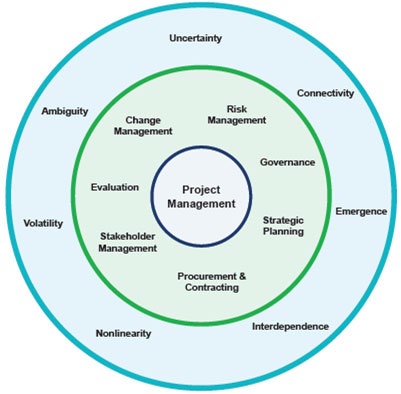
Figure 2: Project Management Ecosystem
Approach
APS Craft and Values
This strategy accepts that the APS Values and Craft capabilities defined by the Australian Public Service Commission (the Commission) underpin the foundational behaviours that are prerequisites for building a professional network of CPM practitioners in the APS.
All areas of APS Craft are guided by the APS Values, which articulate the standard of behaviour expected of all APS employees. To learn more about the APS Values, visit the Commission website. APS Craft is comprised of the capabilities unique to the APS, represented in Figure 3.
These are:
- Integrity - the heart of the APS is the pursuit of high standards of professionalism – both in what we do and how we do it
- Working in Government - a willingness to serve and the ability to apply a deep understanding of the context in which the APS operates
- Engagement & Partnership - working with others to shape policy and services that drive better outcomes for the Australian community
- Implementation & Services - bringing policy to life with effective and efficient services that benefit the Australian community
- Strategy, Policy & Evaluation - delivering great policy and services with strategic analysis and evaluation throughout the policy lifecycle
- Leadership & Management - driving organisational productivity and performance through inspiration towards a common goal.
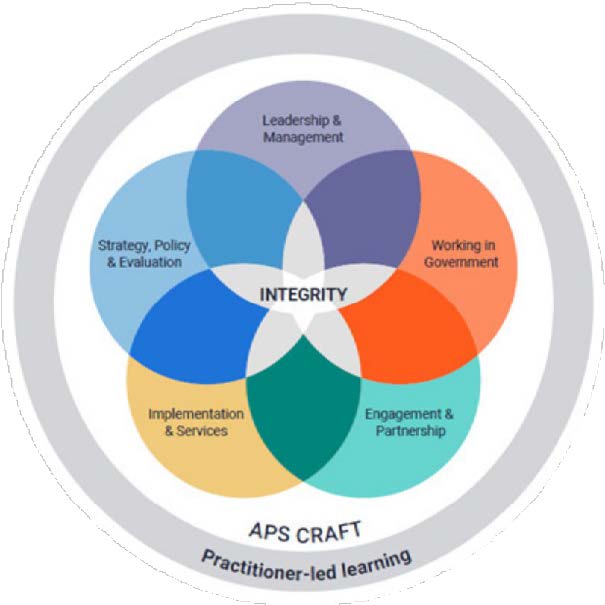
Figure 3: APS Craft diagram
Building an APS Profession
The APS CPM Profession seeks to guide members to acquire the requisite knowledge and skills for complex project delivery in the APS. This includes leveraging educational and networking opportunities for members to:
- better understand the internal (input) and external (environmental) factors that impact the delivery of their project
- better analyse, understand and respond to the sources of project complexity impacting their project
- better form and lead appropriate, multi-disciplinary teams to deliver complex projects
- identify and manage project risks
- ensure the successful delivery of complex projects that deliver impactful, sustainable and enduring outcomes for Australia.
Members will be part of a community that strives to set new standards for excellence in complex project delivery that shapes Australia’s future.
The Heads of Profession for CPM will establish, grow and measure the progress of the CPM profession by:
- Implementing the Strategy and initiatives outlined below.
- Establishing a robust and repeatable measurement regime to assess the performance of the profession and its size, growth, capability, capacity and impact.
- Preparing and implementing a workforce plan for the profession.
Consistent with all other APS Professions, the key principles outlined in Figure 4 will be followed to connect and strengthen CPM capability in the APS.
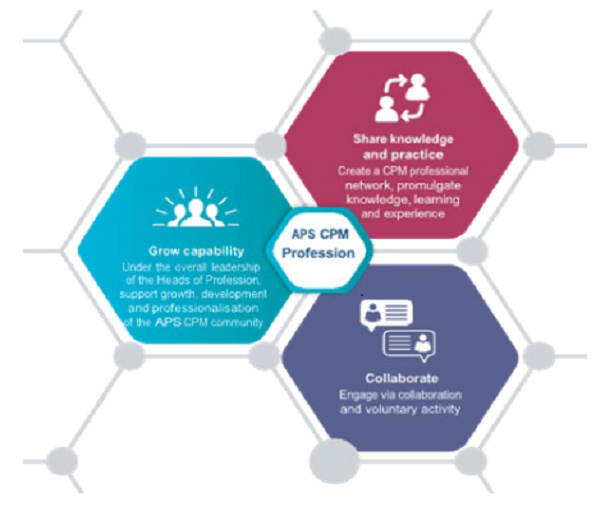
Figure 4: Key Principles of an APS Profession
The Strategy
At this stage of Profession development, the target audience of the CPM Profession Strategy (the Strategy) is APS Portfolio, Program, and Project Managers. It is anticipated, however, that the Profession will have general interest across the APS as many APS job families will have to navigate complexity (Figure 1) in the delivery of projects, policy and service delivery.
High-level assessment of Government reviews from ANAO, Royal Commissions and other sources has provided general themes of failure being:
- Policy/program implementation
- Governance/Leadership and risk management
- Performance and impact measurement.
The strategy is designed to build the Profession and uplift complex project management skills collaboratively across the APS in line with the approach principles to improve planning, management and leadership. This will enable the profession to connect, strengthen practices, collaborate across agencies, and strategically build capability and talent in the CPM workforce and across the wider APS. By delivering this uplift, the intent is to strengthen skills and career pathways in complex project management to better deal with the increasing number of challenges facing the APS to deliver successful outcomes for the Government and the public.
To achieve this, the strategy has 14 initiatives, grouped in four themes as represented at Figure 5. All initiatives have an objective, and a measurement and feedback model. The sequence of implementation is outlined in the CPM Roadmap.
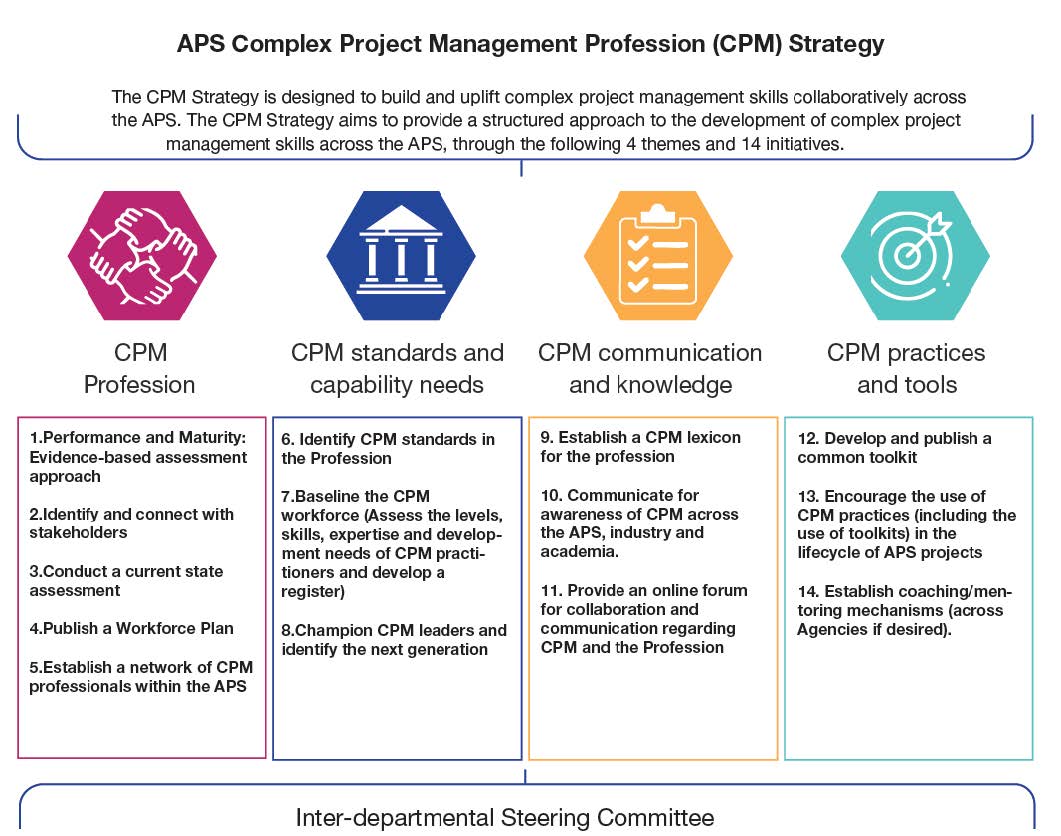
Figure 5: CPM Strategy
Implementation Roadmap
The Complex Project Management Profession Implementation Roadmap sets out the sequence that the iniatives will be implemented over the 2025-27 period.
Theme 1: CPM Profession
Theme Objective: The CPM profession is established, clear about its purpose, connected to key stakeholders and operating effectively.
Theme 1 Initiatives:
Objective: Develop a measurement and feedback approach to ensure that CPM Strategy initiatives achieve their intended purpose and to provide an evidence base to guide HoP and working-level responses.
Measures: Community survey conducted, outcomes incorporated in the design and management of initiatives, and regular processes are in place to assess and respond to community feedback.
Objective: Identify and connect with stakeholders; and clearly articulate the purpose and objectives of the Profession.
Measures: Key stakeholders identified and contacted in APS Agencies, industry, academia and engagements routinely tracked and managed, including stand up of an Inter- departmental Steering Committee to enable a continuous feedback loop and benefits improvement.
Objective: Conduct an assessment to determine the current state of Complex Project Management in the APS.
Measures: Current State survey conducted and Profession community confirmed.
Objective: Publish a Workforce Plan for the CPM Profession that delivers the outcomes of 'Building an APS Profession' (Page 9).
Measures: Workforce Plan endorsed and published with measurable objectives for Agencies to implement.
Objective: Establish a network of CPM professionals within the APS (and broader member community).
Measures: Members have the means to self-identify as CPM professionals, register their interest and receive correspondence. Communication and engagement channels are available and publicised. Regular engagement is underway.
Theme 2: CPM Standards and Capability Needs
Theme Objective: Adopt and support widely recognised CPM standards to build APS workforce capability.
Theme 2 Initiatives:
Objective: Assess and collate available standards for CPM to ensure that Industry-recognised CPM standards, as supported by peak bodies, are identified and adopted in the Profession.
Measure: CPM standards identified and adopted in the CPM Profession member community.
Objective: Assess the levels, skills and expertise required of PM practitioners to enable self-identification of members and the development needs of the community. This will provide a baseline about the CPM workforce that will enable the Profession to make informed decisions about development, talent and succession management.
Supplementary Activities: This will include the definition of key roles and their contribution to CPM, and an assessment of the work undertaken - transactional, advisory, problem solving, strategic, etc. Consistent with recommendations from the Shergold report, and to support future SES appointment considerations, we will commence the establishment of a register of highly experienced CPM professionals to support the APS.
Pathways identified to develop expertise in CPM, which can be through experience (work), networks (people) and qualifications (resources and courses). Work with peak bodies on a potential certification/ accreditation regime to formally recognise the achievements of members in CPM.
Measure: CPM profile developed and published, including recognised member expertise.
Objective: Identify and encourage the next generation of CPM leaders.
Measures: Individual CPM “champions” identified in Agencies. Prospective CPM leaders identified and developed. Succession and transition plan for HoPs drafted.
Theme 3: CPM Communication and Knowledge
Theme Objective: Create a common language around Complex Project Management to ensure shared meaning and establish mechanisms to support collaboration and knowledge sharing.
Theme 3 Initiatives:
Objective: Define common terms and language for use across the APS, to enable a shared understand of CPM concepts, to aid in exchange of ideas and information, and to promote ongoing conversation relating to CPM practices.
Measures: Publication of an informative and accessible CPM glossary. Evidence of consistent use of terminology and concepts in member discourse and in wider APS publications.
Objective: To promote and create a shared understanding of CPM, this initiative seeks to educate the wider APS on CPM, the reasons for adopting the CPM standards, reasons to join the profession as a member, and the desired benefits of the strategy. The Profession will identify, publicise, and potentially support industry and academia-led forums for information exchange on CPM and related topics.
Measures: Increased awareness of CPM across the APS, the member community and stakeholders. Evidence of consistent use of terms and concepts. Growth in membership and member enquiries. Promote forums delivered by industry and academia on CPM or related disciplines, and measure their impact through member attendance, feedback assessment and subsequent engagement. Increase in offers or requests for APS Profession members to speak at industry and academic forums.
Objective: Provide, support and moderate an online forum for collaboration and communication regarding CPM and the Profession, to complement other networking opportunities and information distribution channels.
Measures: Evidence of increasing use of an online forum, with regular feedback results published. Number of members volunteering to act as moderators.
Theme 4: CPM Practices and Tools
Theme Objective: Confirm CPM practices that are suited to Government projects and develop standard tools and guidance to support members in their use.
Theme 4 Initiatives:
Objective: Develop a common toolkit to aid CPM professionals and complexity practitioners in the conduct of their project(s), noting that tailoring tools across agencies from a common base is encouraged. This will include publishing and supporting the toolkit.
Measures: Develop and publish a common toolkit. Measure use of the toolkit by Agencies and other members.
Objective: Encourage the use of CPM practices (including the use of toolkits) in the lifecycle of APS projects. This could include trialing or mandating the use of certain practices such as early-stage complexity assessment by specific agencies, or in Whole of Government practices such as the Digital Transformation Agency ICT Investment and Oversight Framework.
Measure: Evidence of CPM practices in use within Government projects. Increase in requests by central agencies to see evidence of CPM practices in New Policy Proposals and other investment submissions.
Objective: Establish mechanisms for emerging CPM members or those facing complex project challenges to access coaching; and to identify and support experienced CPM practitioners to volunteer to coach; and facilitate support to those who are providing and receiving coaching (across agencies if warranted).
Measure: Coaching request arrangements in place and operating. Coaches identify their offering and potential availability (subject to agency agreement) through the CPM profile and register.